London has Big Ben
and Bristol has Great George
Worthwhile to visit
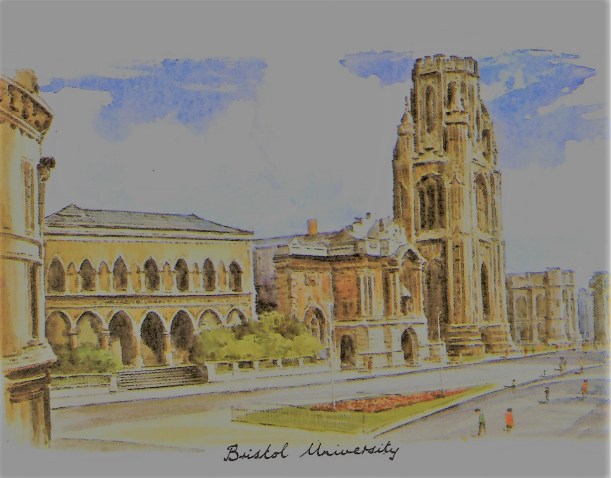
EPSON MFP image


This is a watercolor i did in June (I think) of 2016. I have been reluctant to publish it as I cannot focus my camera properly due to poor vision. But here it is. If you squint maybe you can see it better.
When I was footloose and fancy free
I had an urge to go to sea.
But in truth a ship I could not find
I had read about the Golden Hind.
The only ship that lay at anchor
The owner a local merchant banker.
She was the good ship Walrus
Just as well you did not see us
A motley crew that was quite true
But our hearts were keen and our fears were few.
Some press-ganged from too much ale
Consigned for now to help her sail,
And follow on the breeze
Bound to the west and open seas.
First our heading north through the Irish Sea and past the Mull of Kintyre.
Through lightning and heavy rain I saw St. Elmo’s fire.
A good omen I was told, to see a ship aglow
Old sailors taking in the storm as just another show.
Captain Yarman spoke to us next day
To explain how we would earn our pay.
You work in watches by the bell.
What that meant was hard to tell.
Then spoke the Bo ‘sun a sullen fellow
But beneath his gruff he seemed quite mellow.
Stay sober, be on time and that was it.
Oh! Be clean and always stow your kit.
Leave nothing loose below these decks
The surest way to break your necks
When the seas run high you mark my word
Never tell me you never heard.
That night was ever northward
Towards the midnight sun
And then as the dawn was breaking
We steered for our westward run.
Bound for the Cayman Islands and Montego Bay
Rum at Aunt Jema’ah’s place,
And while the ship was lading a little time to stray.
Those were good days, sailing on the tide.
But some years later my heart was claimed
For now I had a bride.
Her blood ran hot with cayenne spice
And I a land lubber in a trice.
Set now to growing vegetables
And digging in my plot
No longer footloose nor fancy free
Only to dream of days at sea.
The nights when in my hammock swung
Rolling with the waves
And in between the swells I thought
What have I learned in life, what lessons has it taught?
A list counted in my mind.
The most important I could find:
Never forget your passion.
Live life clean and tidy.
Ship shape and Bristol fashion.
Uluru Called my Name- a never-ending quest
Yesterday an old friend with whom I’d been at sea
Stopped by my digs to check, what land-lubbing had done to me.
We sat and talked for many hours, reliving sailing days.
Remembering high-seas and hurricanes and desert island cays.
We opened some bottles of Lindeman 45 and we reminisced.
We talked of opens seas and ocean swells and of the girls we missed.
And the time we sailed from Bremen, Our cook Helmut not the best
every day for seven weeks he put our taste buds to the test.
Seemanns Lapskaus, a most unpleasant dish
We often heaved it overboard if you get my drift.
I heard Uluru call my name and said I have to go.
But why right now I cannot say. I simply do not know.
Where to my friend asked as if he were in shock?
I’m off to watch the sun at the place they call Ayers Rock.
I closed my eyes and drifted off with dreamtime in my mind,
And with Matilda underarm I waltzed away, to see what I could find.
I walked for many weeks, just guided by the stars;
Miles away from Kingsgate, the Outback has no bars.
I camped by a Billabong as Patterson had done
It was already dawning and then I saw the sun
Changing Uluru’s colour; the reason why I came.
But gently carried on a breeze, I still could hear my name.
As we strolled through the garden, Mr. Graves pointed to a small walled recess. A pergola covered with Bougainvillea, stood over a bench, a wrought-iron arm chair and a matching round table. I say wrought-iron for want of a better word. All the furniture had a dull green patina.
But I digress.
G: Shall we sit awhile? After we had settled ourselves, he reached above his right shoulder and a bell sounded. Very soon a plumpish lady appeared.
G: Mrs. De Luna, I know you are busy preparing our evening comestibles, but please, bring a bottle of the Varela and a plate of sardines.
We sat in silence, enjoying the evening air. I could hear sounds of traffic in the town.
Graves waited until his housekeeper had served us before continuing.
G: As I was saying, I am really a poet. I have devoted a lot of my life to getting it right. Of course, not everybody agreed with me. But that’s life I suppose.
My mind wandered slightly. I found myself thinking could it be really true that I was sitting with someone who had had a love affair with Siegfried Sassoon.
Graves poured some more sherry commenting, “Not a bad stuff, this Varela. What do you think?”
Without waiting for my reply he continued.
G: I have a confession. I could not always sit here in the garden like this.
I was wondering, why ever not. But, before I had chance to voice what I was thinking he continued.
G: After the being wounded at the battle of the Somme, I could not stand strong odors of gas or even the scent of flowers. I feel better nowadays. I even like the sardines. Ha ha, he laughed, how about you?
Being something of a novice at this kind of life I thought that the sherry and sardines went well together; quite tasty in fact!
Sitting with Graves chatting like this, brought to mind the old saying: that when a wise man speaks it’s because he has something to say. When a foolish man peaks it’s because he has to say something. I held my tongue for fear of revealing my inadequacy chatting casually with such a man of learning.
Graves had been an officer in the Royal Welch Fusiliers and had had the title of honorary Welshman bestowed as a result of eating a leak before his assembled regiment on the feast of St. David, the patron saint of Wales. He wasn’t Welsh by birth. No, he was born in Wimbledon in Surrey about 10 miles south of the city of London. He was related in fact to a German noble family that went by the name of von Ranke. This fact got him into a lot of trouble during his school days; but that’s another story.
A gong sounded in the house.
G: Our dinner is ready. Let’s see what Mrs. De Luna has prepared today. I heard she was down at the fish market so we might be in for a treat.
We sat down to a splendid meal a chilled cucumber soup with bitter melon, Basque style fillet of sole, paella with clams and shrimp, chorizo, chicken and squid on a bed of saffron rice with diced Romano tomatoes. The tapas we had eaten in the garden had sharpened my appetite; I was hungry. The dishes were all arranged nicely in the center of the table. We were expected to help ourselves.
G: Here, try some of this. I think you’ll like it; goes well with the fish and the clams for that matter. It’s from Catalonia and has become one of my standbys when I have guests for dinner. I poured the wine and handed back the bottle.
As we spooned our soup I asked Graves what he meant by an historical grammar of poetic myth. He explained.
G: Many people tend to take poetry at face value and what’s more they miss the deeper meaning that the poet is conveying. This had a root back in medieval times when court poets were asked to entertain, by the re-telling of ancient stories, they purposely garbled most of their work. They did this for several reasons. Some of their stories contained secrets which they did their best to conceal. Also, many heresies were contained in their works for which they did not want the prying eyes or in this case ears of the burgeoning church to discover. You understand, much of their work had already survived the invasion of Ireland by the Vikings and what wasn’t burned or otherwise destroyed by the marauding Danes was both rare and precious. On top of this, the court poets regarded their masters as illiterate morons. They approached their work with caution however, in order not to bite the hand that fed them.
The garlic sauce accompanying the sole was light and did not overpower the fish is the slightest way.
G: So you see, there are questions which by now are probably long forgotten but for any one with the inclination to pursue a mystery they could start with some questions: Who cleft the devil’s foot? What secret was woven into the Gordian knot? Why did Jehovah create trees and grass before he created the sun moon and stars? Where will wisdom be found? The answers lie hidden in poetry. I’ve spent a life-time looking.
G: have some more of the paella Mrs. De Luna will be pleased.
Graves continued: You have to know that these court poets spent at last three years in apprenticeship learning several hundred traditional stories by heart and often as many as one hundred and fifty different cypher alphabets. They were indeed a very elite class of people. No wonder they held their illiterate masters in tacit contempt. The alphabets they mastered were not the simple ABC’s that we have nowadays. No sir, they included both finger and tree Oghams, which have long fallen into disuse.
The ancient bards brought all sorts of hidden knowledge with them in their travel from court to court. Then slowly as the years passed and Christianity took hold, sympathetic magic and pagan ceremonies were forgotten. Times changed.
The Burnham Light
Peering through the darkness and descending fog
We see the Burnham Light
It will surely guide us
On this frightful night.
It’s a welcome beacon that we see,
off our starboard side.
We start our final homeward stretch
Upon the rising tide.
At Avon’s estuary we sound
Two blasts upon our horn
But there is no returning sound to us,
on this cold and wintry morn.
Slow steam ahead the captain calls
And through telegraph relayed
And in the engine room below
Slow steam ahead displayed.
The engines go quite quiet,
Just the surf we hear.
As through the mist we forge ahead
Our hearts filled with fear.
The cold night air upon the deck
Chills one to the liver.
Upon the bridge, a friendly smile
Hello captain, my name’s Tom
Your pilot for the river.
We enter in the stream
Green and red lights in our spotlight beam
Steady on the port side Sir
And slow astern I deem.
Our vessel she’s the Monterrey
And she has served us well
With St. Brendan as our guide
She’s brought us through the swell.
The worst is Biscay bay
When storms come from the west
The back of our old vessel
Is put unto the test.
But now we approach home port
And hearts we left behind.
This sailing an adventure;
No regrets for which I signed.
I’ve got my book and pay galore
And glad to step ashore
But I know that in a week or two
My heart will yearn for more.
I’m the vagabond.
I have waltzed Matilda well.
Sailed seas and oceans.
I once went to sea.
A beautiful pea-green boat
There are no Bong trees!
They fly you half way
drop you at gate twenty-eight
then you walk the rest.



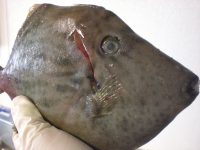


 Fa - the Green Dragon
You must be logged in to post a comment.